
"coffee growing zones"
2000 article(s) found

Main producing areas and characteristics of coffee
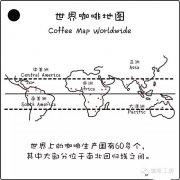
Coffee production zones (commonly known as coffee belts) range from 25 degrees north latitude to 30 degrees south latitude, covering many countries in Central, West Africa, the Middle East and South Asia, the Pacific, Latin America and the Caribbean. The reason why coffee cultivation is concentrated in this area is mainly due to the limitation of temperature. Because coffee trees are vulnerable to frost, neither north nor south latitude is suitable, especially in the tropics.

Introduction of how to brew single bean in Shaqisuo producing area
For the exchange of professional baristas, please pay attention to the coffee workshop (Wechat official account cafe_style) Yegashafi, Ethiopia, Africa is close to the famous Kaffa forest, the whole region is a wild coffee forest, there are many and numerous coffee varieties, at least 1000 kinds of coffee, scholars and experts recognize that the birthplace of Arabica varieties is also a global treasure house of coffee genes. Commonly known as Ethiopia Ye family snow

The characteristics of coffee in Guji Xiachisuo region Introduction to coffee types in Xiachisuo region
Weixin Official Accounts cafe_style Guji Shakisso coffee production area characteristics Shakisso coffee production area introduction Guji production area can stand out as a new highlight in the eyes of fine coffee fans, in addition to its own geographical advantages, quality farmers and ECX division changes, Shakisso (sometimes translated)
Fine Coffee-Yunnan small Coffee
Yunnan is the main coffee bean producing area in China. Yunnan is located in the subtropical mountain climate zone south of the Tropic of Cancer, with unique plateau red soil, fertile and loose soil and mild climate, which is especially suitable for growing small-grain coffee. Yunnan coffee was first introduced by French missionaries in 1902. Up to now, there are still 24 coffee trees with more than 90 years old in Zhukula Township, Binchuan County. Rui Lijing, 1914
Coffee tasting | learn coffee from balanced American beans.
When it comes to boutique coffee, there are some vague definitions, such as variety, treatment and quality identification, but there are also some very clear definitions: only in the most favorable microclimate and soil and water can we grow boutique coffee with unique flavor. The last issue of coffee taste introduction, coffee taste introduction, drink high-quality products to distinguish the varieties! Flavor of Iron pickup and bourbon Coffee varieties
Coffee beans Coffee varieties Yunnan Arabica coffee
Yunnan is China's main coffee producing area. Yunnan is located in the subtropical mountain climate zone south of the Tropic of Cancer, with unique plateau red soil, fertile loose soil, mild climate, especially suitable for planting small coffee species. Yunnan coffee was first introduced by French missionaries in 1902. Up to now, 24 coffee trees with more than 90 years old still grow in Zhukula Township, Binchuan County. 1914 Ruili Jing

Yunnan small Coffee with long aftertaste treatment method of Grinding degree and Baking degree of Fine Coffee beans in Huaguoshan
Cardamo Catimor is an improved variety of Tiebika seed, with 25% Robusta gene Yunnan small-grain coffee with good quality. Take Lujiangba small-grain coffee as an example: the percentage contents of the main components are as follows: crude fat 17.1, reducing sugar 0.93,starch 3.07,nitrogen 2.27,crude protein 1.419, ash 3.70,19.33 crude fiber, 2.14,9.20 sucrose and 6.87 moisture. Cloud
The growing environment of coffee trees evergreen trees of the subgenus Rubiaceae
The formation environment of coffee trees in botany, coffee trees belong to the evergreen trees of the subgenus Rubiaceae, and coffee beans, commonly known as coffee beans, are actually the seeds of the fruit of coffee trees, just because they are shaped like beans, so they are called coffee beans. Climate is the decisive factor for coffee cultivation. Coffee trees are only suitable for growing in the tropics or subtropics, so the zone between latitude 25 degrees south and north is generally called

What natural conditions do coffee trees need to grow?
The planting conditions of coffee trees the origin of coffee trees is in Ethiopia, Africa. In botany, coffee trees belong to the evergreen trees of the subgenus Rubiaceae, and coffee beans, commonly known as coffee beans, are the seeds of the fruit of coffee trees, just because they are shaped like beans, so they are called coffee beans. Climate is the decisive factor for coffee cultivation, and coffee trees are only suitable for growing in the tropics or subtropics.

What conditions are needed for the planting of coffee trees? it is not very important to the environment.
The origin of the coffee tree is Ethiopia in Africa. In botany, coffee trees belong to the evergreen trees of the subgenus Rubiaceae, and coffee beans, commonly known as coffee beans, are the seeds of the fruit of coffee trees, just because they are shaped like beans, so they are called coffee beans. Climate is the decisive factor for coffee cultivation. Coffee trees are only suitable for growing in the tropics or subtropics, so latitude 25 is south and north.

What are the suggestions for baking single bean in Shaqisuo area?
For the exchange of professional baristas, please follow the coffee workshop (Wechat official account cafe_style) □ Ethiopia District is divided into four levels, the order from large to small is Region, Zone, woreda, kebele. Most of the names of raw coffee beans follow this rule. This Guji / Shaquiso is located in the southeast of Yejia Sheffield, a well-known producing area, and is subordinate to the division of administrative regions.
The main producing areas and characteristics of Coffee in the World
Coffee production zones (commonly known as coffee belts) range from 25 degrees north latitude to 30 degrees south latitude, covering many countries in Central, West Africa, the Middle East and South Asia, the Pacific, Latin America and the Caribbean. The reason why coffee cultivation is concentrated in this area is mainly due to the limitation of temperature. Because coffee trees are vulnerable to frost, neither north nor south latitude is suitable, especially in the tropics.

Rich aroma of Indonesian Manning Coffee Flavor and Taste characteristics of Fine Coffee
A number of scattered feudal kingdoms were established in the 7th century AD. Recorded dynasties include the death of the Buddhist Sri Buddha (mid-7th century-1293), who was conquered by Manabache, and the Kingdom of New Keshari, which controlled the Strait of Malacca (1222-1292), which led to the Yuan-claw War, and then the royal family established the most powerful Malacca in Indonesian history in Java with the help of the Yuan army.
Basic knowledge of Coffee Coffee planting Belt
Most of the coffee producing areas in the world are located in the tropics between the Tropic of Cancer and the Tropic of Cancer, which we call the coffee belt and Coffee Belt or Coffee Zone in English. As a tropical cash crop, coffee trees grow in coffee belts with excellent climatic conditions, where the sun shines all the year round, is rich in calories and Rain Water, and the annual average temperature is above 20 ℃. But the high temperature

There are three countries in Asian coffee producing areas where coffee is grown in Yunnan and there are treasures in the depths of white clouds.
Professional coffee knowledge exchange more coffee bean information Please follow the coffee workshop (Wechat official account cafe_style) front street-Asian coffee producing area introduces Asian beans and island flavor: mellow thickness is higher than Central and South American beans and African beans, but the sour taste is lower, the flavor is slightly heavy wood, herbs, spices and soil, the low dull flavor is higher than the rising sour flavor. Island beans are light and mild.

Processing method of single bean in Shaqisuo producing area information planting distribution in producing area
Professional baristas Please pay attention to the Coffee Workshop (official Wechat account cafe_style) in view of the disadvantages of the traditional sun drying method, the water washing method comes with it. Use a peeling machine to separate most of the pulp from the coffee beans, then guide the shelled beans to a clean sink, soak them in water and ferment to completely remove the residual pulp layer. In the past (about five years ago

How about coffee in Gujiso area? how many flavors of coffee beans in Shaquiso area?
Exchange of professional baristas please pay attention to the coffee workshop (Wechat official account cafe_style) Gujiso production area how about individual coffee HARRAR this area is the town around Hara, is the oldest production area. Coffee in this area is so special that it is not in an environment that requires additional irrigation. Hara has enjoyed a high reputation over the years, although

Characteristics of planting history of single bean coffee bean flavor description in Shaqisuo producing area
For the exchange of professional baristas, please pay attention to the reason why the coffee workshop (Wechat official account cafe_style) Guji producing area can stand out and become a new bright spot in the eyes of boutique coffee fans, in addition to its own geographical advantages, high-quality farmers and changes in the division of ECX, the micro-producing area of Shakisso (sometimes translated as Shakiso) also plays an important role. Shaquiso's coffee belongs to Guji.

A brief introduction to the planting market price of Yunnan small-grain coffee Huaguoshan boutique coffee bean varieties with moderate sour taste
Yunnan coffee is a variant of Arabian original species, which has been cultivated for more than one hundred years after long-term cultivation and domestication. Due to the unique geographical environment and climatic conditions, Yunnan coffee has formed a unique flavor of strong but not bitter, fragrant but not strong, with a little fruit flavor. World-class coffee experts evaluate it as the best coffee in the world, and its cultivation

What kind of weather conditions do you need to grow coffee beans? which countries have natural bars for growing coffee trees?
At present, coffee has been grown in more than 50 countries in the world, but most of the good coffee beans are concentrated in the equatorial zone between 25 degrees north latitude and 30 degrees south latitude, high altitude, tropical climate and fertile soil. in order to grow full-grained, coffee-rich high-quality coffee beans. Coffee beans are grown all over the world, mainly in Brazil, Colombia, Indonesia and Vietnam.